Ukraine
  Azerbaijan
  Estonia
  Latvia
  Lithuania
  Kazakhstan
  Poland
  Uzbekistan
Published:
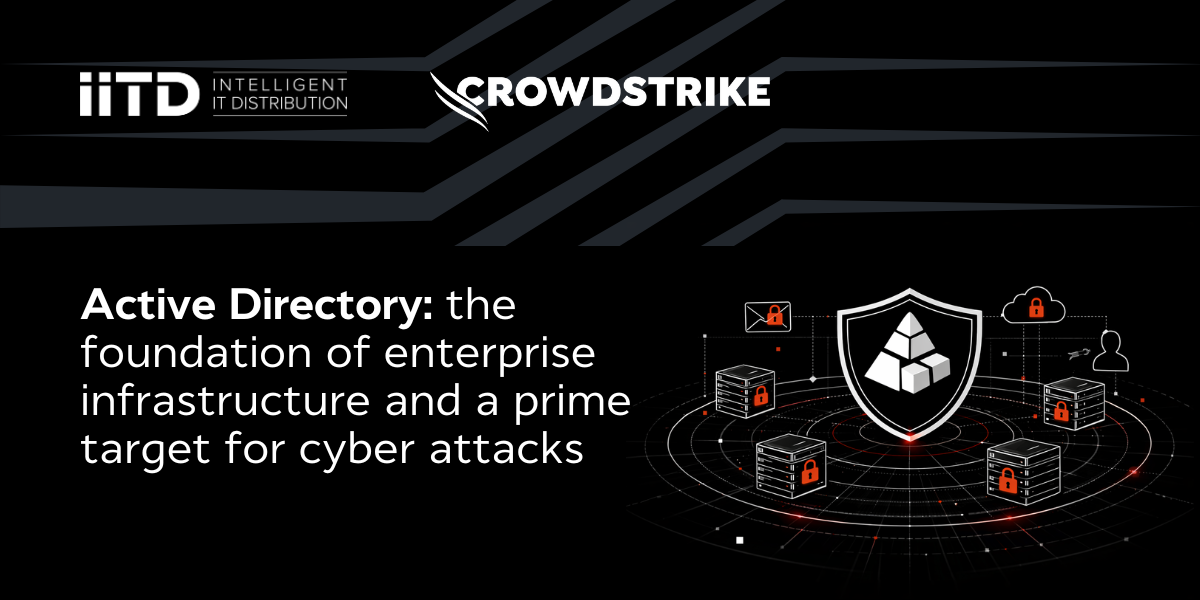
Active Directory: the foundation of enterprise infrastructure and a prime target for cyber attacks
The article is also available at:


In most organizations, Active Directory is so familiar that it’s almost taken for granted. It operates in the background, doesn’t directly impact business processes, but the daily work of employees, IT systems, and services depend on it.
Active Directory (AD) is Microsoft’s foundational service for centralized management of users, computers, access rights, and security policies in Windows infrastructures. It defines who is a user in the corporate environment, what systems and resources they have access to, and what actions they can perform.
Over the decades, Active Directory has become the de facto standard for corporate Windows networks. Through it, user authentication, file access, email, and business applications are performed, and IT teams centrally manage computers and security policies. For most companies, AD is not a standalone product but the foundation of IT infrastructure, without which centralized access management is unimaginable.
That’s why Active Directory is often taken for granted. If the service operates stably and doesn’t create obvious problems, it’s considered to be all right. However, this familiarity hides systemic risks that are becoming increasingly apparent in the face of modern cyber threats.
The ubiquity and familiarity of Active Directory make it unique. It is present in almost every organization, deeply integrated into key IT and business processes, and cannot be quickly replaced or disabled without serious consequences.
Active Directory is the single point of truth for identities within a company. If there are issues with it, the consequences affect the entire organization, not just a specific system or service. This concentration of access control in one service makes AD a critically important security element and at the same time an attractive target for attackers.
In a typical corporate architecture, Active Directory authenticates all users, regardless of their department or geographical location, through a single domain. Organizational Unit allows structuring of accounts but does not create full security isolation (fig. 1).

Fig.1 Typical Active Directory architecture where all users, departments, and remote employees authenticate through a single domain and central controller.
Security of Active Directory extends far beyond protecting a single server or service. AD is Microsoft’s Windows directory service that centrally manages accounts, permissions, and access to network resources. A typical Active Directory environment includes several key components, such as Active Directory Domain Services (AD DS), Active Directory Certificate Services (AD CS), and Active Directory Federation Services (AD FS), which provide authentication, certificate operation, trust between systems, and integration with external services.
IT administrators rely on these services daily to perform critical operations. Every user login to the domain, every access to a corporate application or file resource goes through domain controllers. If a user has advanced privileges, it is Active Directory that defines the boundaries of their authority. Compromise of AD means not just the loss of a single service but the potential control over the entire corporate network.
Active Directory stores account records, password hashes, and user privileges, including administrators. This data is concentrated in the NTDS.dit file, which serves as the central AD database used for authentication and authorization within the domain. Gaining access to this file or its replication mechanisms allows an attacker to impersonate any domain user.
The peculiarity of such attacks is that they often occur through legitimate Active Directory mechanisms without the use of classical malware. As a result, traditional security measures may fail to detect the compromise at early stages.
Apart from architectural risks, there are common practical issues in real-world environments, such as excessive access rights, inactive or forgotten accounts, weak password policies, lack of multi-factor authentication, and uncontrolled growth of privileged groups. These conditions significantly simplify lateral movement across the network and privilege escalation for attackers.
The combination of centralized control and accumulated vulnerabilities makes Active Directory one of the main targets of modern attacks. Compromise of a single account often becomes the starting point for multistage scenarios. Initially, an attacker gains access to the environment, then gathers information about roles and privileges, performs lateral movement, and gradually escalates access.
A single account compromise often serves as a starting point for multistage attacks, in which attackers leverage security groups, service accounts, and excessive privileges. The typical attack path in Active Directory is shown in fig. 2.

Fig. 2. Typical attack path in Active Directory: from phishing a user to complete domain control.
The longer an attacker remains unnoticed, the more difficult it is to restore trust in the environment. After compromising Active Directory, organizations often struggle to confidently determine which accounts and systems remain secure, complicating the response and increasing business risks.
In many organizations, Active Directory protection is primarily focused on privileged accounts, such as domain administrators, IT staff, and service accounts with elevated permissions. Accounts belonging to regular employees or technical roles often remain outside the area of heightened attention, as they are considered “non-critical.”
This very approach led to an incident in a European organization, described in incident response analytical reports. The company applied multi-factor authentication and monitoring only to privileged accounts, while standard user accounts were not subject to behavioral analysis and lacked additional control mechanisms.
The attacker gained initial access by compromising a non-administrative employee account. The credentials were stolen through a phishing attack. Because this account was not classified as critical, the authentication attempt did not raise suspicion, and access was granted without additional verification.
After gaining access, the attacker began reconnaissance of the Active Directory environment by analyzing security groups, delegated permissions, and existing trust relationships. Using standard, legitimate Active Directory mechanisms, the attacker performed lateral movement across the network and eventually obtained access to an account with elevated privileges. As a result, the domain was compromised, allowing the attacker to gain control over other systems and services within the organization.
The incident investigation revealed that the core issue was the lack of a unified approach to protecting all accounts. Securing only a selected group of “important” users did not prevent the attack, as the attacker leveraged a less protected account as the initial entry point.
This case clearly demonstrates that in an Active Directory environment, every account matters, regardless of the user’s role or privilege level. Even minimal access can become the starting point for large-scale compromise if a comprehensive identity protection strategy is not in place.
In practice, partial protection of Active Directory creates a false sense of security. In real-world attacks, adversaries rarely begin with a domain administrator account. Far more often, they exploit poorly protected or “secondary” accounts as the starting point for privilege escalation.
Protecting Active Directory requires an approach that goes beyond traditional auditing, event logging, and reactive incident response. Conventional security tools capture individual events but often fail to identify relationships between accounts, their behavior, and real-world attack scenarios. In the case of Active Directory, this is insufficient, as most modern attacks rely on legitimate authentication and authorization mechanisms.
CrowdStrike Falcon Identity Protection is a next-generation platform designed specifically to secure Active Directory and hybrid environments. It operates at the identity and privilege level, providing continuous analysis of account posture, access rights, and environmental changes. The solution integrates with Active Directory without requiring architectural changes and delivers centralized visibility across all users, service accounts, and automated identities. This approach to Active Directory security combines full identity visibility, privileged access control, and the ability to detect and stop attacks in real time (Fig. 3).

Fig. 3. Conceptual model of Active Directory protection based on full identity visibility, privileged access control, and continuous threat detection.
One of the platform’s key technical advantages is the construction of a complete identity graph. Falcon Identity Protection analyzes relationships between users, groups, privileges, and resources, enabling the identification of hidden privilege escalation paths and attack scenarios that cannot be detected through isolated event analysis. As a result, IT and SOC teams gain not just a list of events, but contextual insight into how an attacker can move through the environment.
The platform leverages artificial intelligence and machine learning–based analytics to detect anomalous account behavior. Specifically, it can identify atypical login patterns, attempts at lateral movement, abnormal use of privileged accounts, suspicious changes in security group membership, and unusual queries to domain controllers. This approach enables the detection of attacks at early stages, before an attacker gains persistent control over the domain.
Falcon Identity Protection also supports continuous monitoring of changes within Active Directory. Any modifications to access rights, creation or alteration of accounts, changes to group policies, and privilege adjustments are captured with full contextual information. This significantly simplifies auditing, incident investigation, and root cause analysis of compromises. Importantly, the platform does not merely alert on incidents, but also provides clear visibility into which specific accounts and resources are at risk.
Support for hybrid environments plays a critical role as well. Falcon Identity Protection operates across both on-premises Active Directory and cloud-based identities, including Microsoft Entra ID environments. This enables organizations to control access and monitor identity behavior within a unified context, which is especially important for companies with distributed or partially cloud-based infrastructures.
From a technical perspective, CrowdStrike’s solution complements EDR and SIEM by focusing specifically on identities as the primary attack surface. Integration with the CrowdStrike Falcon ecosystem enables event correlation across endpoints, identities, and other security components, improving detection accuracy and reducing response times.
For this reason, protecting every account is critical. It does not matter whether the account belongs to a system process or to a regular employee, such as a warehouse worker or a driver. Every account in Active Directory represents a potential point of compromise and can be used as an initial foothold for an attack. CrowdStrike Identity Threat Protection enables comprehensive protection of Active Directory across the organization, regardless of account type or privilege level.
Active Directory is a critically important service that underlies access to all corporate resources. Its ubiquity and deep integration make AD both an indispensable and vulnerable element of infrastructure.
Modern threats show that Active Directory security can no longer be considered a secondary technical task. Protecting identities, analyzing privileges, and controlling account behavior become key factors for business cyber resilience. This approach is realized in CrowdStrike Falcon Identity Protection, which allows maintaining control over Active Directory, reducing attack detection time, and minimizing the risks of large-scale incidents.
iIT Distribution – the official distributor of CrowdStrike, provides distribution and promotion of solutions in Ukraine, Kazakhstan, Uzbekistan, Kyrgyzstan, Azerbaijan, Georgia, Estonia, Lithuania, Latvia, Moldova, and Poland, as well as professional support for their design and implementation.