Cloud Security Automation: Updates to CrowdStrike Falcon Cloud Security- image 1

Cloud Security Automation: Updates to CrowdStrike Falcon Cloud Security

The article is also available at:
Ukrainian, Azerbaijani, Kazakh, Russian

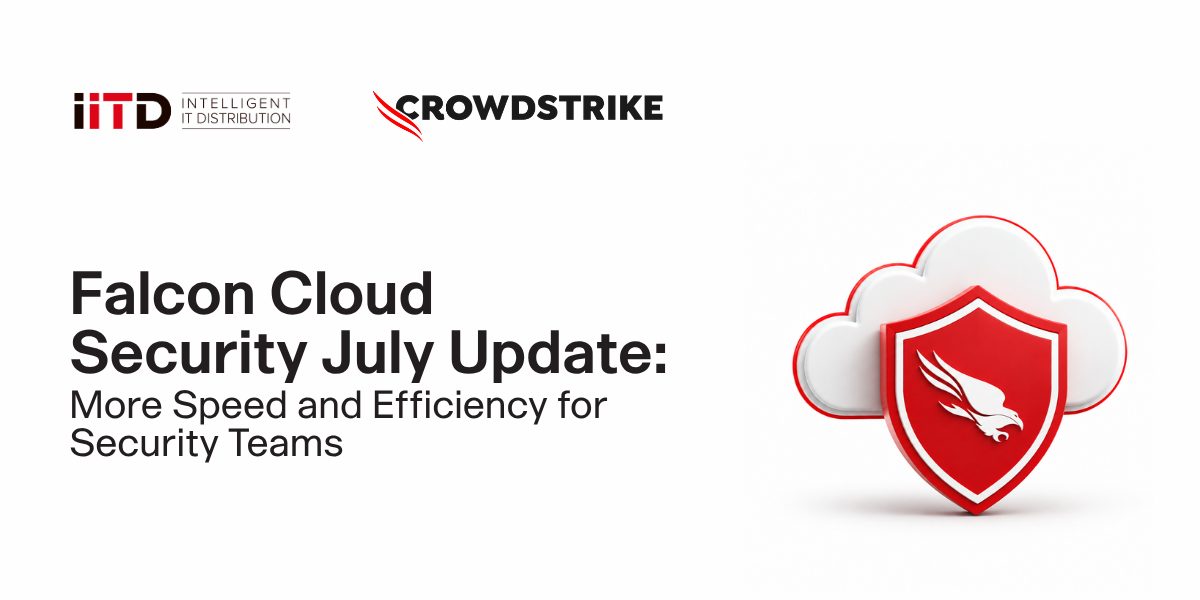
Every change in the cloud environment automatically generates a need for new cybersecurity solutions. Requirements for validating new Infrastructure as Code (IaC) templates, regularly reviewing access permissions, and supporting the latest application release demand continuous analytical control. Individually, these tasks seem like standard routines, but on a corporate infrastructure scale, they create operational friction that significantly slows down the development and deployment life cycle. The latest update to the CrowdStrike Falcon Cloud Security platform solves this problem by offering enhanced tools to reduce the manual burden on security teams.

Cloud Security Automation: Updates to CrowdStrike Falcon Cloud Security - image 1
PROBLEMATIC

Impact of Routine Tasks on Scaling

Traditional monitoring approaches often turn information security specialists into a bottleneck during the release of new products. When engineers are forced to manually check Kubernetes manifests, analyze account ties, or approve IAM policies, the speed of releases is critically reduced. The global shift towards managing infrastructure as code means configurations are formed decentrally, and any delay in identifying vulnerabilities until the production stage requires additional cycles of architecture rewriting. Innovations from CrowdStrike shift the focus from reactive responses to deep security integration within development processes.

AUTOMATION OF IAC

Architecture Control During Development

As cloud infrastructure is increasingly defined through code, it’s most effective to check templates at the point of their creation. The Falcon Cloud Security solution integrates IaC checks directly into developer environments — Visual Studio Code and IntelliJ. In addition to using built-in vendor policies, organizations can create Custom Rego Rules. This enables the customization of specific scanning rules for their own business. All detected deviations are synchronized with the general Falcon console, providing engineers with immediate feedback to rectify errors before initializing the deployment workflow.

ACCESS MANAGEMENT

Account Analysis and Quick Fixes

Cloud permission systems continuously change through service automation and the addition of new components. To simplify complex investigations, the company has expanded its Cloud Infrastructure Entitlement Management (CIEM) toolkit. The Permission Querying function, combined with the Graph Explorer, allows analysts to easily explore relationships between accounts and resources, even if the system has not yet recorded direct threats. Moreover, specialists no longer need to write JSON policies manually: the platform generates optimal IAM rules based on the principle of least privilege in one click, based on historical activity.

APPLICATION ANALYTICS

Detection of Hidden Connections and APIs

Modern applications regularly interact with the cloud through privileged credentials, secrets, and infrastructure scripts. The Advanced Security Posture Management (ASPM) module received the Admin Actions function, which aligns source code analysis results with CIEM analytics. This helps identify what actions at the cloud management plane level an application plans to execute. Also introduced is the API Findings tool, which automatically detects incoming and outgoing interfaces directly in the code — including REST APIs and gRPC services. This approach ensures full visibility of communication paths without the need for manual documentation.

DEPLOYMENT PROCESS

Agentless Monitoring and Kubernetes Environments

Implementing control tools should not add additional complexity to the infrastructure. The update expanded support for Agentless VM Scanning for Microsoft Azure. This provides deep vulnerability assessment without installing agents on end servers. For organizations that actively use containerization, a new Kubernetes Deployment Wizard has been introduced. This tool automatically forms a ready-to-install security script for Amazon EKS, Azure Kubernetes Service, Google Kubernetes Engine, and Red Hat OpenShift clusters, reducing deployment time to a few minutes.

In summary, the transition from manual control to automated CrowdStrike solutions ensures a stable balance between innovation speed and cybersecurity level. Integration of checks into development environments, an agentless approach to VM monitoring, and instant IAM permission adjustments remove key barriers to scaling DevSecOps.

iIT Distribution, as the official distributor of CrowdStrike solutions, provides comprehensive support at all stages of the security initiatives implementation. The iIT Distribution team provides qualified consultations, assists in designing a reliable protection architecture, and guarantees full project support, integrating the vendor’s advanced technologies according to the business priorities and specifics of the IT industry of partners and customers.

News

Current news on your topic

All news
All news