Critical cPanel Vulnerability: CVE-2026-41940 Authentication Bypass- image 1

Critical cPanel Vulnerability: CVE-2026-41940 Authentication Bypass

The article is also available at:
Ukrainian, Azerbaijani, Kazakh, Uzbek, Russian

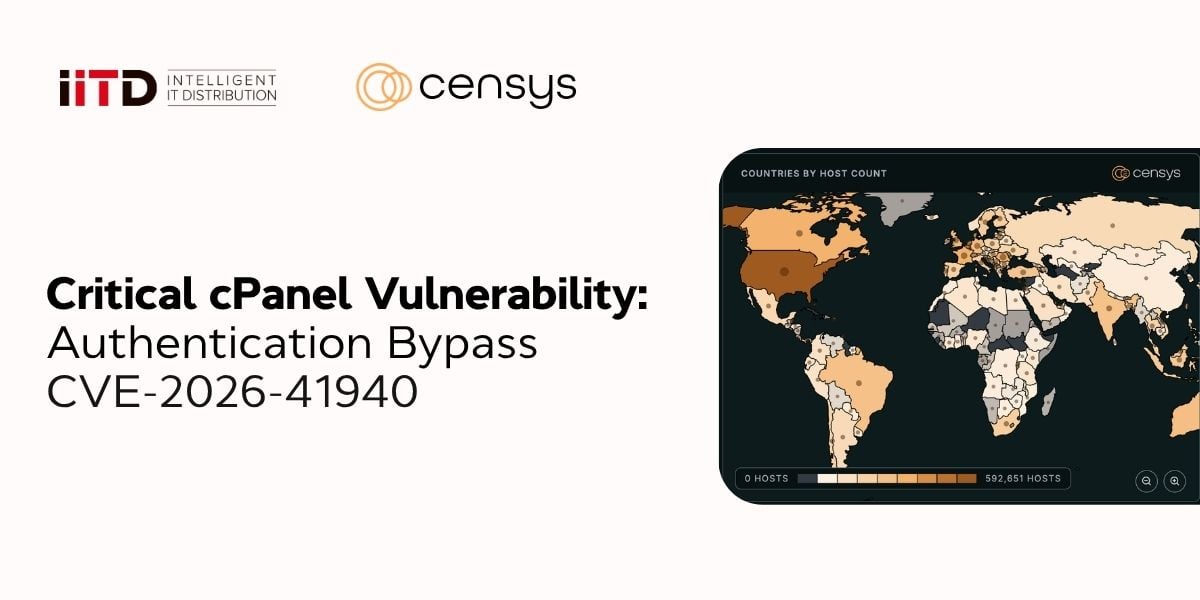
At the end of April 2026, corporate infrastructure faced a large-scale threat — experts detected a critical vulnerability CVE-2026-41940 with a maximum rating CVSS 9.8 in popular control panels cPanel and WHM. According to the analytical platform Censys, the global attack surface encompasses about 1.1 million exposed hosts and 6.7 million web properties. The flaw allows a remote unauthorized cyber attacker to gain full administrative access to the server without credentials entry. This necessitates the immediate implementation of containment protocols by IT teams.

Critical cPanel Vulnerability: CVE-2026-41940 Authentication Bypass - image 1
THREAT ANATOMY

Mechanics of Exploiting the Vulnerability and Market Response

The technical essence of the problem lies in the default server-handled session storage and loading mechanisms. Due to incorrect component logic, a cyber attacker can generate a valid administrative session, entirely bypassing the authentication process. cPanel officially disclosed this issue on April 28, 2026, and on the same day, researchers recorded massive scanning and exploitation attempts of vulnerable instances on the network. The situation was further aggravated after the publication of a working exploit (PoC) by WatchTowr on April 29, which significantly lowered the technical threshold for conducting attacks.

DETECTION CHALLENGES

Why Remote Infrastructure Scanning is Ineffective

The main challenge for security teams lies in the difficulty of remotely identifying vulnerable builds. The most obvious marker — the header “Server: cpsrvd/<version>” — is absent in most hosts tracked by Censys. Even if this header is present, it often points to outdated, unsupported software branches for which the developer has not released patches. Other network indicators also do not reliably differentiate between a secure version and one containing the authentication bypass defect. As a result, the only correct approach is mandatory local verification of every active control panel instance within the corporate network.

RESPONSE STRATEGY

Practical Steps for Containment and Deployment of Fixes

The algorithm to overcome this crisis requires a combination of network isolation and prompt software updates. Since the vulnerability is exploited through standard management ports (2082, 2083, 2086, 2087, 2095, 2096), the primary task is to block them at the firewall level for all external traffic. Once the threat is localized, it is necessary to deploy fixed builds of cPanel and WHM (from 11.110.0.97 to 11.136.0.5).

cPanel provided a special script that system administrators must use to check local session files for indicators of compromise. An important step after applying patches is the complete replacement of all administrative passwords and API keys, as the database might have been disclosed before the vulnerability was fixed.

MARKET PRECEDENT

Radical Server Isolation by Leading Providers

The high level of danger forced major players in the hosting market to take radical preventive measures. Providers Namecheap and InMotion officially confirmed on their pages that during the deployment window of updates, they completely blocked access to the cPanel and WHM web ports. This example demonstrates a shift in priorities for corporate risk management: ensuring data integrity is a much more important task than maintaining uninterrupted user access to administrative interfaces. Such practice highlights the high qualification of incident response teams in information security.

SECURITY PARADIGM

Transition to Zero Trust Architecture

The incident with CVE-2026-41940 is a compelling argument for abandoning the traditional model of hosting control panels in open access. Modern infrastructure demands a transition to Zero Trust principles, where control planes are hidden from the public internet, and access is granted only through secured tunnels and multi-layered verification systems.

The vulnerability in cPanel demonstrates that publicly exposing administrative interfaces creates critical risks for businesses, regardless of the organization’s scale. Prompt deployment of fixes is necessary, but a comprehensive transition to the Zero Trust model remains the only reliable and long-term solution. The company iIT Distribution, as a distributor of information security solutions and advanced IT infrastructure, provides expert support in implementing modern approaches to protecting the attack surface. The iITD team assists partners and clients in integrating advanced cybersecurity platforms, thoroughly analyzing project requirements, and building a resilient architecture that effectively counters the most complex network threats.

News

Current news on your topic

All news
All news