Ukraine
  Azerbaijan
  Estonia
  Latvia
  Lithuania
  Kazakhstan
  Poland
  Uzbekistan
Preemptive Security – Why Deception Is Becoming a Key Element of Defense Strategy
For many years, cybersecurity strategy relied mainly on a reactive approach – first an incident occurred, then it was detected, analyzed, and only then were corrective actions taken. At times when attacks were less advanced, such a model often sufficed. However, with the increase in threats and growing complexity of IT infrastructure, merely reacting to incidents is no longer effective. Therefore, many organizations are approaching defense strategy building based on preemptive cybersecurity.
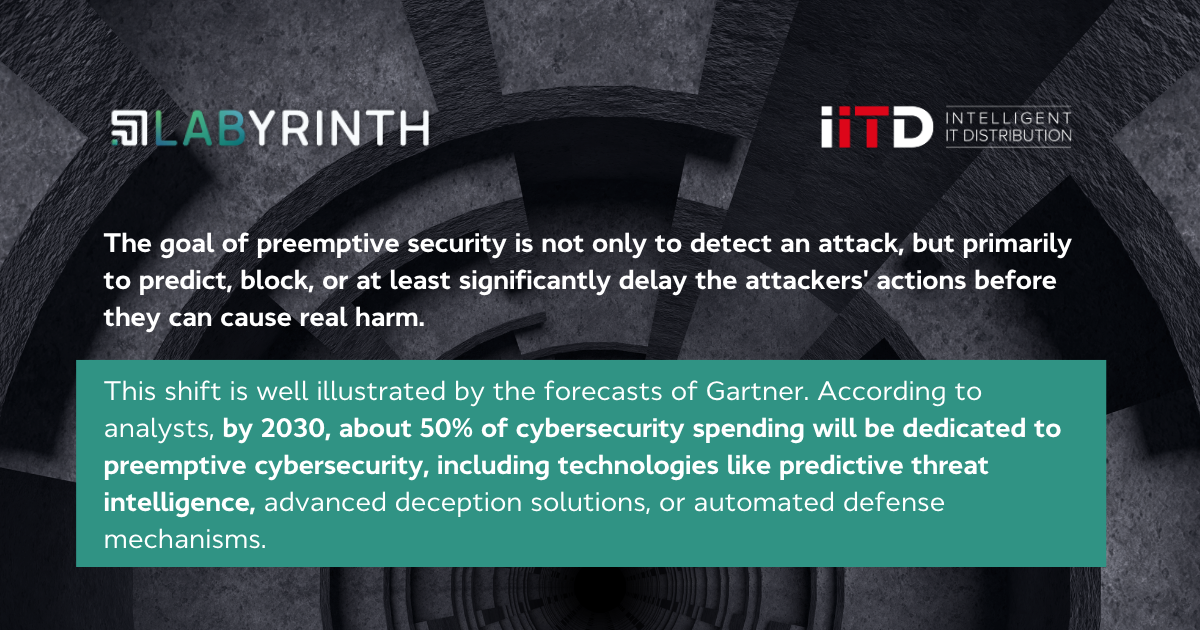
The goal of preemptive security is not only to detect an attack, but primarily to predict, block, or at least significantly delay the attackers’ actions before they can cause real harm. This shift is well illustrated by the forecasts of Gartner. According to analysts, by 2030, about 50% of cybersecurity spending will be dedicated to preemptive cybersecurity, including technologies like predictive threat intelligence, advanced deception solutions, or automated defense mechanisms. For comparison – in 2024, the share of such tools in security budgets was less than 5%.
This is a clear signal that the cybersecurity industry is entering a new stage, where solutions allowing organizations to outpace attackers’ actions rather than just react to the consequences of their operations will play a key role.