Readiness for Autonomous AI: Closing the Infrastructure Gap- image 1

Readiness for Autonomous AI: Closing the Infrastructure Gap

The article is also available at:
Ukrainian, Russian

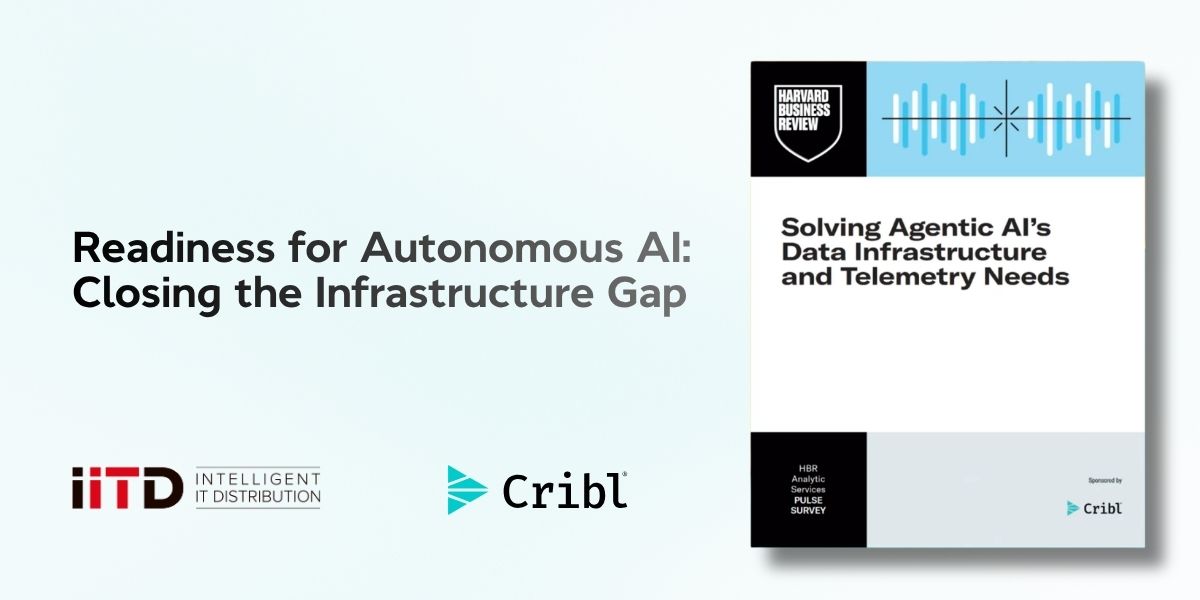
According to the latest research from Harvard Business Review Analytic Services, 96% of organizational leaders view agentic AI as a critically influential factor in their companies’ strategy over the next two years. Yet only 23% of enterprises report having a formalized plan and the supporting infrastructure in place today.

Autonomous agents that independently analyze large volumes of enterprise data and make decisions around security or customer experience demand extremely high compute capacity. This infrastructure gap is driving exponential cost growth and forcing businesses to fundamentally rethink their technology approach.

Readiness for Autonomous AI: Closing the Infrastructure Gap - image 1
The Reality of Transformation

Hardware constraints of autonomous algorithms

Trying to run modern agentic AI on architectures designed for static dashboards and manual queries is like bolting a rocket engine onto a minivan. Technically, it may move, but the underlying components will not withstand the load. Cribl notes that as organizations move from pilot models to full-scale enterprise deployment, the streaming data processing foundation becomes the primary bottleneck.

The market data is telling: 76% of leaders expect a dramatic increase in system log volumes, and 80% already recognize the inevitability of rebuilding network capacity. When every additional query triggers an avalanche of new compute operations, AI becomes a tax on growth. As a result, 47% of organizations are reporting significant budget overruns, while 82% are preparing for unavoidable financial challenges as they attempt to satisfy the demands of agentic AI.

Fuel for Algorithms

The evolution of enterprise telemetry

To overcome the profitability barrier, architects must fundamentally reassess telemetry’s role in the ecosystem. For years, it was stored “just in case” and used primarily as a tool for retrospective incident investigation. In the era of agentic AI, those data sets are becoming the core fuel for predictive modeling.

Autonomous systems continuously learn from historical baselines, but they also require rich real-time context to make sound operational decisions. If information remains locked in fragmented, isolated environments due to the limitations of closed software, critical blind spots emerge. The more relevant signals that feed the model, the more accurately it identifies issues and minimizes false conclusions.

Impact Scenarios

The practical consequences of context deficit

Real-world use cases clearly demonstrate how strongly the effectiveness of intelligent systems depends on the quality of the monitoring infrastructure. In cybersecurity, an AI agent must clearly distinguish normal network behavior from potential malicious activity. For example, if engineers have recently completed a scheduled update to the company’s firewall configurations, the algorithm must receive that context immediately.

Without access to historical telemetry and visibility into recent environmental changes, the system will generate an endless stream of false positives, effectively paralyzing SOC operations. When the pricing model of storage solutions becomes a hard ceiling that limits the flow of enterprise data to AI processors, the business loses the ability to control machine actions, immediately undermining customer trust.

The Architectural Foundation

Three criteria for enterprise readiness

HBR research emphasizes that leading enterprises do not define success by the number of smart tools they deploy, but by the presence of a fundamentally new foundation. Readiness for the autonomous era is defined by three critical characteristics of how information is handled.

First, control. Log collection is treated as a primary workload. Data is routed and formatted before it reaches expensive storage systems, allowing organizations to keep costs under tight control.

Second, context. Semantic understanding is applied to raw signals, enabling the platform to normalize fragmented streams and correlate new signals with previous incidents.

Third, freedom of choice. Organizations are deliberately moving away from hard lock-in to a single manufacturer’s portfolio in favor of open architectures that support a multi-model environment.

In summary, large-scale AI initiatives are stalling midway not because the vision is flawed, but because the underlying infrastructure is too weak to carry the load. A new approach to telemetry, combined with a resilient architecture, transforms a complex algorithmic process into a predictable engine for business scale.

Download the full HBR Analytic Services Report to see how your organization compares, where the biggest readiness gaps are, and what leaders are doing differently.

As an official Value Added Distributor (VAD) of information security solutions, iIT Distribution provides comprehensive expert support to enterprises preparing for the era of autonomous AI. The iITD team helps partners design data system architectures and implement advanced technologies efficiently, including solutions from Cribl. The distributor’s specialists support projects at every stage—from needs assessment and the design of optimized telemetry routes to solution deployment—while delivering ongoing technical consulting and training for enterprise professionals.

News

Current news on your topic

All news
All news